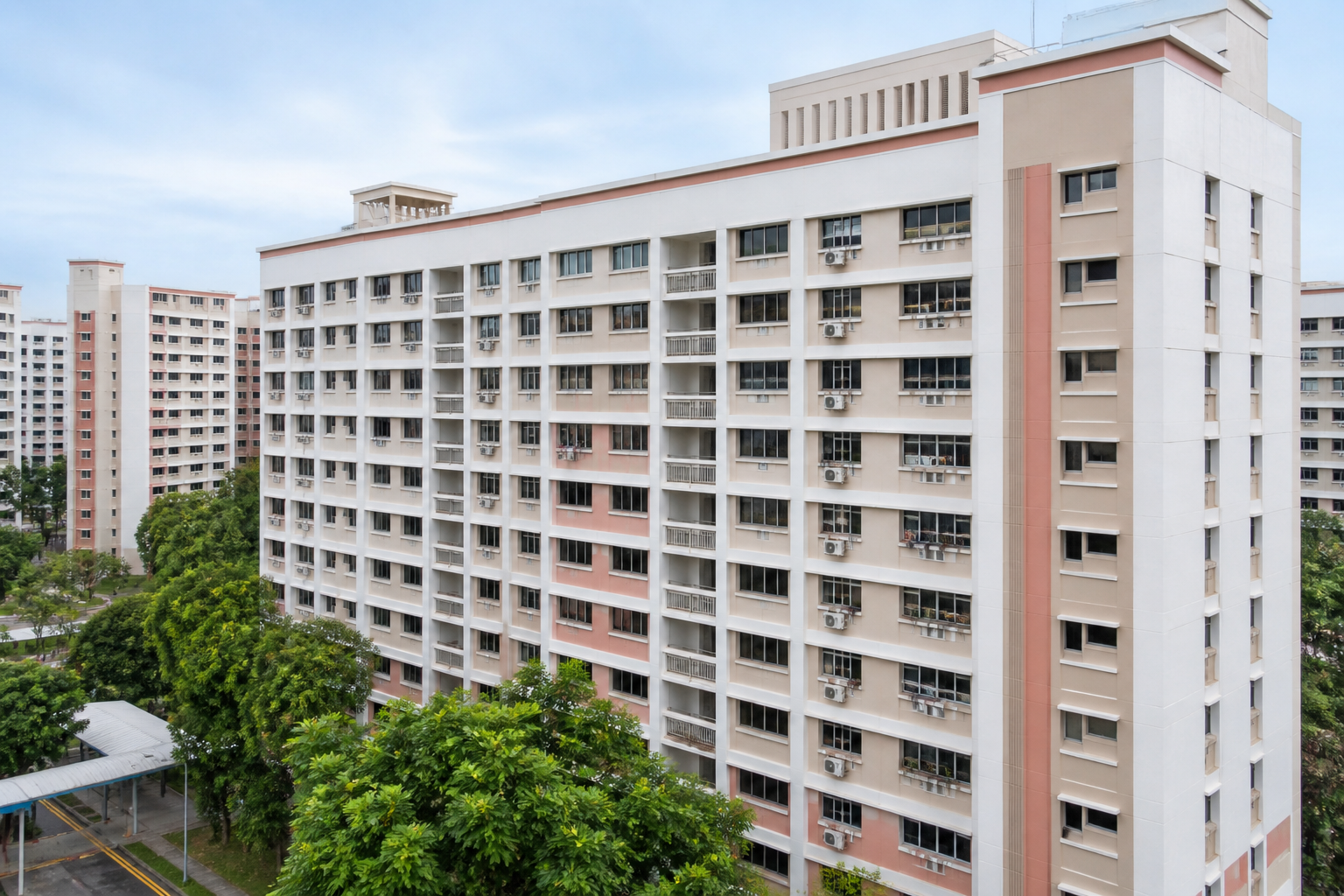
Most people who buy a condo have an HDB chapter in their past — or still have one running in parallel. Which is why when a resident recently asked about a relative going through a separation, the question felt worth addressing properly.
Divorce and property is genuinely complicated in Singapore, and HDB rules add a layer most people don’t fully understand until they’re already in the middle of it.
The three outcomes for an HDB flat in a divorce
When a couple divorces, there are really only three things that can happen to a jointly-owned flat:
1. One party retains it The spouse staying in the flat needs to buy out the other party’s share. Eligibility rules apply — Minimum Occupation Period, age, income ceiling, citizenship status. CPF used for the flat also has to be refunded with accrued interest back to the CPF accounts of the party leaving.
2. Both parties sell on the open market Subject to MOP being met. Sale proceeds get split based on the Family Justice Court’s Ancillary Matters order.
3. One party takes over as sole owner via transfer Similar to scenario one, handled directly through HDB when both parties agree. All the same eligibility checks still apply.
What catches most people off guard: the court decides what happens first, not HDB. The Family Justice Court issues the order, and only then can the couple execute it with HDB. Two separate processes, running at different speeds.
What most people get wrong
The biggest misconception is that the party staying can simply take over and the other person walks away clean. That’s not how it works. CPF refund obligations follow the property. If your spouse used CPF to service the mortgage, that money — plus accrued interest — has to go back to their CPF OA. That directly affects how much cash changes hands, and sometimes means a “buyout” leaves very little in the pocket.
Rules also differ depending on whether it’s a subsidised flat or a resale flat, whether children are involved, and whether the remaining lease is long enough to satisfy HDB’s requirements post-transfer.
For a detailed breakdown of how each scenario plays out — including CPF refund calculations, eligibility rules, and what happens when both parties can’t agree — this guide on HDB divorce in Singapore covers the full picture.
Why this matters for condo residents
A number of residents upgraded from HDB and still hold one — rented out or waiting on MOP. If a separation happens during that window, the HDB flat joins the matrimonial asset pool alongside the condo. Two properties, two sets of rules, one court order trying to resolve all of it.
Understanding the HDB rules first — even after you’ve moved to private property — still matters.
Getting the right help
Divorce is already draining. A property dispute running alongside it pushes most people to the limit. If you or someone you know is trying to work through the HDB piece of a separation, an agent who specialises in this area can walk through the options before anything gets locked in.
The guide above is a good place to start.